
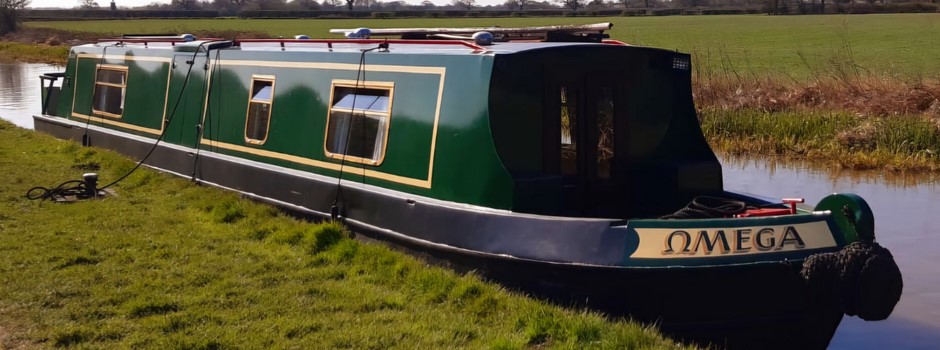
A Dutch Barge Share....or Two!
A shared ownership Experience
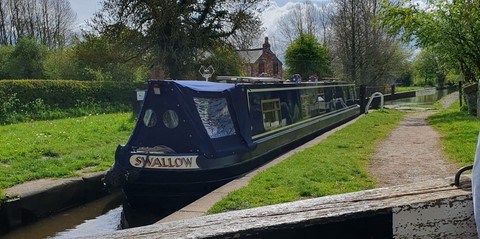
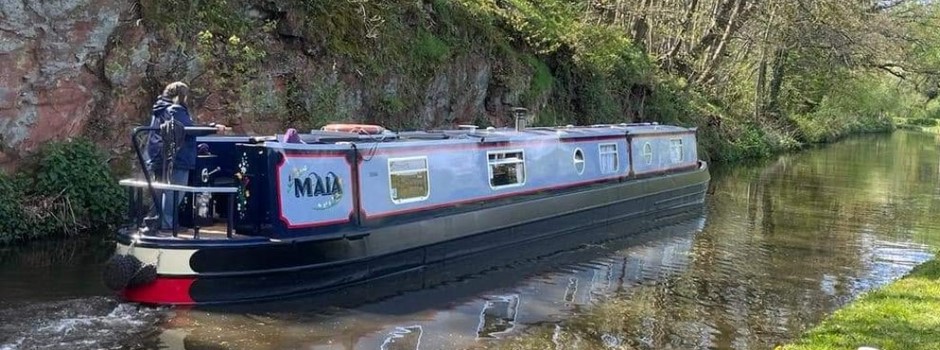
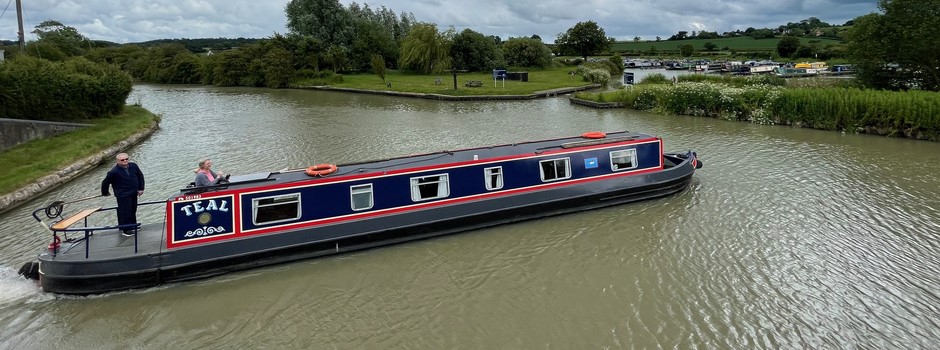
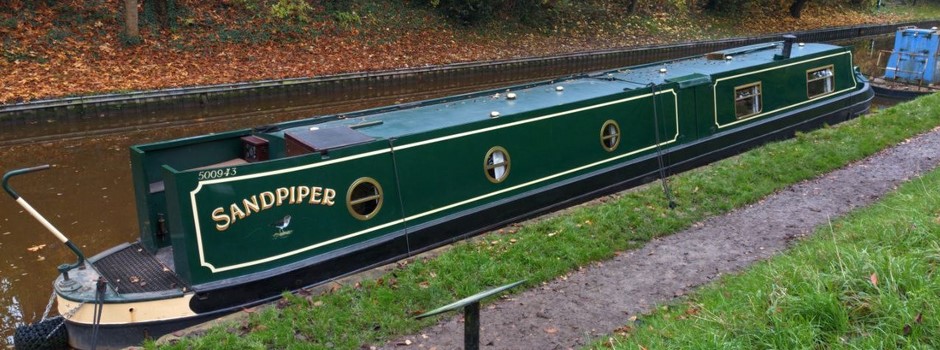
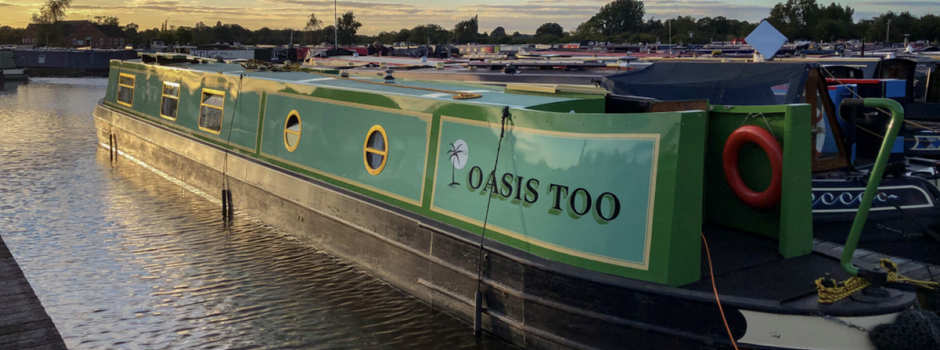
“You’re not getting me in one of those rusty bathtubs on some stinking canal!” was Annette’s reaction when I first proposed the idea of a narrowboat adventure. She is 9 months older than me and I mention this only because she was the first to turn 40 and, as one of our daughters turned 16 at about the same time, we threw a huge party with a marquee, a band, etc and invited our family and friends to celebrate but, when my 40th birthday came around a few months later, I thought: “I don’t want another party; let’s do something different, something that we wouldn’t otherwise have done.” In spite of Annette’s poor view of my suggestion (or maybe because of it), I persevered and we hired 40-foot narrowboat for a long weekend on the Kennet & Avon canal. She LOVED it! So much so that soon after she kept asking: “Can we buy one?”
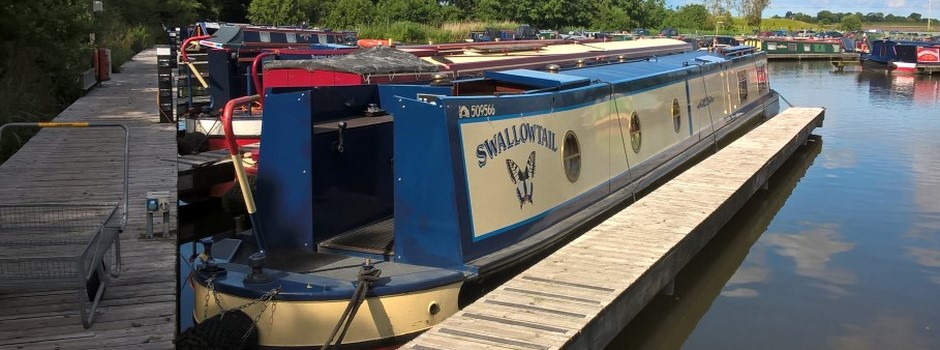
It didn’t take me long to realise that this would be either impossible or a long way off in the future, financially, and I had almost given up on the idea when I discovered Ownerships Ltd. Within a year, we had bought a second-hand share in Swallow, a 58-foot narrowboat with a semi-traditional stern, then based on the Stratford on Avon canal but later we moved her home mooring to Great Haywood marina on the Trent & Mersey canal.
Although the barge (sic) was owned outright by its 12 shareholders, Ownerships provided a management service which included creating the annual booking schedule, cleaning between holidays, arranging maintenance and repairs, changing the home mooring if required, organising any upgrades and an annual meeting at a hotel, for a fee of course. Each owner had 3 weeks aboard per year and we enjoyed lovely trips to places such as central Birmingham, Braunston, Stourport, Warwick, Worcester and, of course, many pubs in between.
A Shared Ownership Experience
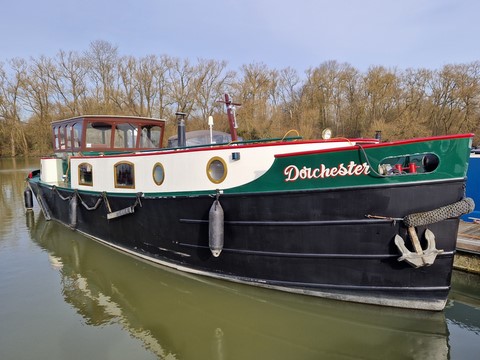
It was through Ownerships that we became aware of Dutch-barge-style pleasure boats, as the company had ventured into this market from 2001, launching a small fleet of six 55-foot replica Dutch barges, four based at Auxerre in France, one in Ireland and one on the Thames which was the focus of our attention, each named after a town on a river beginning with ‘D’ (for Dutch). Although this would limit our cruising to the river and perhaps the Kennet & Avon canal, the idea appealed because of the much-increased space aboard; we would even have a private cabin to ourselves – what luxury!
The main benefit for me personally was an enclosed wheelhouse; no more getting soaked in the rain at the tiller while the family warmed themselves by the fire.
So we joined the DBA, sold our share in Swallow and bought a one-tenth share in Dorchester which offered us 4 weeks aboard per year. She was based near Chertsey but later we moved her home mooring to Thames & Kennet marina where she has since remained. At about this time Ownerships decided to withdraw from the Dutch barge market and Dorchester’s owners took over the management of the boat. Just as well; Ownerships went bust a year later.
A Shared Ownership Experience
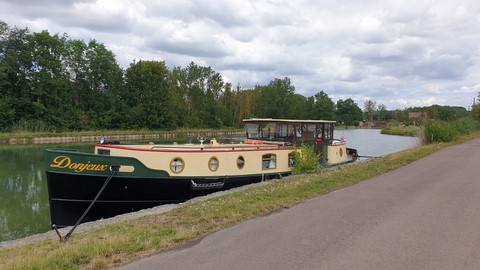
After 6 years of cruising the Thames, we fancied another challenge so we sold our share in Dorchester and bought a one-twelfth share in Donjeux, based at Auxerre. An ex-Ownerships barge she had also become self-managed by the shareholders. As the cruising season in this part of France is limited by the locks, their being manned only between Mar and Oct with self-service operation not permitted, we would get either 2 or 3 weeks aboard per year. We normally cruise her on the river Yonne and the Borgogne and Nivernais canals in the Burgundy region but she has ventured into Paris a few times. We still own this share but, after a few years, we had become semi-retired, so had more time available, and we realised that we were missing the Thames so we bought back into Dorchester and we now own shares in two Dutch barges.
I know what you’re thinking by now; sharing a boat must have its problems and I won’t lie: there are some down-sides. For one thing, all decisions are by majority vote which means that it can take a while to change anything, your ‘great idea’ might never find favour with the other owners and the majority might decide to do something that you don’t like. Annette loves to tell the story of the carpet tiles aboard Swallow, which came up for discussion at one of the annual meetings. Suffice it to say that, when the debate over the colour got to 2 hours, she lost patience and took herself off to the hotel’s bar!
I know what you’re thinking by now; sharing a boat must have its problems and I won’t lie: there are some down-sides. For one thing, all decisions are by majority vote which means that it can take a while to change anything, your ‘great idea’ might never find favour with the other owners and the majority might decide to do something that you don’t like. Annette loves to tell the story of the carpet tiles aboard Swallow, which came up for discussion at one of the annual meetings. Suffice it to say that, when the debate over the colour got to 2 hours, she lost patience and took herself off to the hotel’s bar!
There is the risk that one of the owners might not leave the boat in the condition to which one would like to find it and this has happened though very rarely. On Swallow we even had a ritual where each owner would buy a bottle of wine and leave it aboard for the next owner.
Self-managing means that some of the owners must do some work; the syndicate needs at least a chairman and a treasurer. Ideally, the work can be shared more widely, with perhaps a secretary, a chief engineer and a bookings manager. Finally, one cannot guarantee that the boat will be available on the dates in the future that one would like it to be. That said, both barges have a rotating booking process which makes reservations as fair as possible and there are some very big advantages to shared ownership. Most of the expense of owning a boat is in the form of fixed costs (e.g.: insurance, river licence, mooring fee, routine maintenance, etc); by sharing, each owner is paying only a fraction of these. Similarly, major unplanned expenses such as repairs are much more palatable when one is only paying a tenth or a twelfth of the cost and we don’t have to cut corners; indeed, it means we can splash out on occasions. For example, Dorchester has just had an external paint job and we also decided to replace all the windows and the curtains at the same time. It is also less risky; although both Donjeux and Dorchester are well-used, cruising pretty-much constantly during the spring/summer months,
if something aboard breaks down and needs repairing or there is an accident that causes some damage, we share the cost and we can afford to get it fixed without delay. On both barges, the owners do some of the maintenance themselves but we can afford to pay contractors to do the ‘heavy lifting’ so to speak.
Shared ownership costs us around £400 per week of cruising and this has been the only means by which Annette and I could afford to be on the water for several weeks per year. A final bonus is the syndicate; one joins a ready-made group of experts who are only too willing to provide any advice that may be needed. Both barges have lively chat groups on social media. I don’t think Annette and I would have been brave enough to make the leap from a narrowboat to a Dutch barge without this help and assurance.
If this article has piqued your interest, the best resource for further research is Boatshare.co.uk. In conclusion, our experience has been not so much a journey aboard a “rusty bathtub on a stinking canal” and rather more in-line with Ownerships’ old motto: “Affordable Luxury Afloat.”
This article was written by Andrew Fells and appeared in the Auguest 2025 edition of , The Barge Association Magazine.